
Why Your Lifeboat Drills May Be Creating a False Sense of Security

Most vessels conduct regular lifeboat drills. Crews board the lifeboats, start the engines, and feel prepared. But in polar and cold-water environments, these drills may be giving operators and crews a dangerous false sense of security.
The combination of a standard lifeboat and a conventional immersion suit is often inadequate for the realities of polar abandonment. The IMO Polar Code and Transport Canada’s ASSPPR demand much more than a successful drill in calm conditions.
The Problem with Standard Lifeboat + Immersion Suit Drills
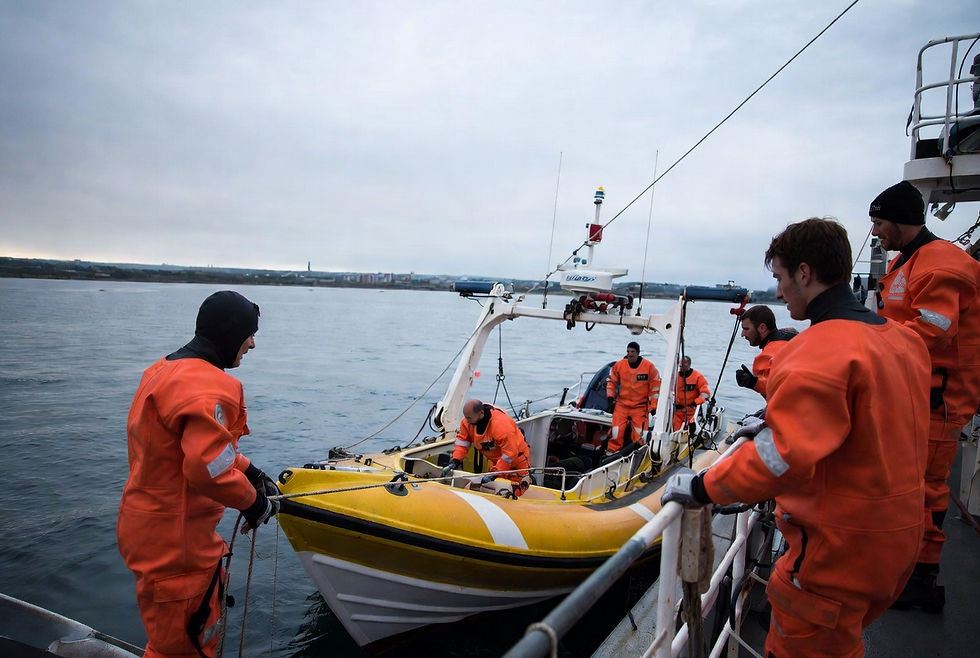
Typical lifeboat drills assume:
Rapid and orderly abandonment
Quick transfer into enclosed lifeboats
Relatively short time until rescue or reaching a safe haven
Minimal exposure to the elements
In polar reality, these assumptions frequently break down:
Lifeboats can become trapped in ice or damaged during launch
High seas and freezing spray make orderly evacuation extremely difficult
Rescue times often extend well beyond 24–48 hours (and sometimes far longer)
Crew members may spend significant time in the water or on ice before reaching a lifeboat
Standard neoprene immersion suits, paired with lifeboat drills, are tested for short-duration protection in mild conditions. They are not designed for prolonged exposure to sub-zero air, wind chill, and continuous wetting — the exact conditions crews face in real polar emergencies.
The Hidden Risk in Polar Abandonment
Even if the lifeboat is successfully launched, survivors often face:
Delayed or impossible lifeboat recovery due to ice
Prolonged time in open water before boarding
Hypothermia and loss of dexterity long before group survival kits can be effectively used
Reduced ability to assist others or operate lifeboat systems
This creates a critical gap between what crews practice in drills and what they may actually experience in a real polar incident.

How the Arctic 10+ Changes Abandonment Outcomes
The White Glacier Arctic 10+ was designed to bridge this dangerous gap by turning individual protection into extended functional capability:
Personal Habitat Mode — The integrated splash tent allows survivors to create a sheltered microclimate while waiting for or during transit to a lifeboat.
Extended Thermal Protection — With a CLO value of 4.87 and advanced passive insulation, it maintains core temperature and dexterity far longer than standard suits, even after water ingress.
Usability Features — Removable arms enable crew members to eat, drink, signal, and perform tasks inside the suit, preserving both physical capability and mental resilience.
Better Training Realism — Drills using the Arctic 10+ can incorporate realistic scenarios such as extended time in the water, ice-edge transfers, and delayed lifeboat boarding.
Crews training with the Arctic 10+ report higher confidence, better performance in extended drills, and a clearer understanding of their actual survival window.

The Bottom Line for Responsible Operators
Your lifeboat drills should not simply check a regulatory box — they should prepare crews for the worst-case polar scenario. Relying on standard immersion suits during these drills can create a false sense of security that does not match real-world conditions.
The Arctic 10+ allows you to conduct more honest, effective training while providing genuine multi-day survivability if the worst happens. It transforms abandonment from a high-risk scramble into a managed, survivable event.
True readiness means training with equipment that performs when drills end and reality begins.
Ready to elevate your abandonment drills and polar readiness? Contact Diego Jacobson, CEO White Glacier djacobson@whiteglacier.com | +1 939-430-1264 www.whiteglacier.com
This post is for educational purposes and references the IMO Polar Code, Transport Canada ASSPPR, and independent testing. White Glacier products are certified to USCG, MED, Transport Canada, and UK MCA standards.


Comments