
Polar Code 2026 in Action: Navigating the New Rules for Non-SOLAS Vessels and Why Advanced Survival Gear Matters Now
- diego7475
- Jan 20
- 3 min read
Updated: May 23
As of January 1, 2026, the International Maritime Organization (IMO) has expanded the reach of the Polar Code through amendments adopted in 2023 (Resolutions MSC.532(107) and MSC.538(107)). These changes mark a significant step in enhancing safety for ships operating in the harsh Arctic and Antarctic environments. The amendments now extend mandatory requirements for safety of navigation and voyage planning to previously unregulated non-SOLAS vessels.
The Polar Code has been mandatory for larger SOLAS ships since 2017. It recognizes the unique risks of polar waters: extreme cold, ice, remoteness, delayed rescue, and limited infrastructure. With melting ice opening new routes, more vessels are venturing north and south. These updates are timely and critical.
Here are the key Polar Code maps illustrating the geographical scope in the Arctic and Antarctic regions:

Who Is Now Covered? The Expanded Scope for Non-SOLAS Vessels
The amendments introduce new chapters (9-1 for Safety of Navigation and 11-1 for Voyage Planning) in the Polar Code. These chapters apply to:
Fishing vessels of 24 meters in length overall and above
Pleasure yachts of 300 gross tonnage (GT) and upwards not engaged in trade
Cargo ships of 300 GT and upwards but below 500 GT
These vessels must comply when operating in polar waters. This includes Arctic waters beyond certain flag state territorial seas or the full Antarctic area. New builds from January 1, 2026, must meet the rules immediately. Existing vessels have until January 1, 2027, for full compliance, often aligned with surveys.
These smaller vessels—often involved in fishing, expedition cruising, research, or niche cargo—now face the same core safety obligations as larger ships. This includes up-to-date ice information, enhanced navigation equipment (e.g., echo sounding, anti-icing devices), detailed voyage planning, and risk assessments tailored to polar hazards.
Check out these real-world examples of vessels now in scope navigating icy conditions:

And small cargo or expedition ships pushing through pack ice:

Beyond Navigation: The Critical Role of Personal Survival Equipment
While the 2026 amendments focus primarily on navigation and planning, the broader Polar Code emphasizes life-saving appliances (LSA) and personal protective equipment (PPE). These are crucial to address the life-threatening risk of immersion in near-freezing water. Hypothermia sets in rapidly, and rescue in remote polar areas can take days—far beyond the typical 6-hour protection of standard immersion suits.
The Code requires insulated immersion suits or thermal protective aids sized for all persons on board, especially for passenger ships. There are functional requirements for creating a "habitable environment" during extended survival. In practice, this means gear that maintains core temperature without relying on one-time consumables like chemical heaters or batteries, which can fail in extreme cold or after initial use.
Standard neoprene suits often fall short in multi-day scenarios due to heat loss from wind, spray, and prolonged exposure. That's why advanced solutions are essential for true compliance and safety.
Why the White Glacier Arctic 10+ Is the Superior Choice in the 2026 Era
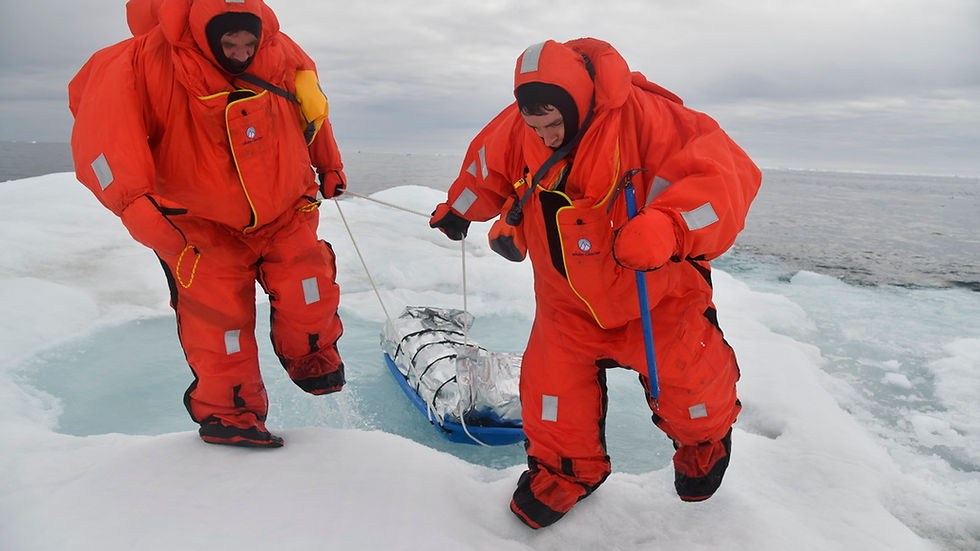
The Arctic 10+ immersion suit is engineered to exceed Polar Code expectations. It delivers true multi-day thermal protection with a high CLO value (4.87) through passive three-layer insulation (convection, reflection, contained air)—no batteries or chemicals required.
Key Advantages for Non-SOLAS Operators Now Under the Code
Proven performance in rigorous tests (e.g., Trondheim, Norway): subjects stayed warm for 6+ hours in near-freezing water with no cold sensation. Modeling supports far longer survival aligned with the 5-day rescue expectation.
Lightweight (~6kg), quick-don design (<60 seconds), 10-meter jump capability, fire resistance, and modular features like the splash tent/personal habitat.
Seamless integration with life rafts, EPIRBs, and other systems—ideal for fishing crews, yacht expeditions, or small cargo operations where space and logistics are limited.
See the Arctic 10+ in action during extreme cold-water testing:


Preparing for Compliance: Practical Steps for Operators
With the rules now in force, operators should act quickly:
Audit your fleet for polar operations and confirm vessel applicability.
Update voyage planning procedures, navigation equipment, and risk assessments.
Equip with reliable PPE/LSA—prioritize suits that provide extended, fail-safe protection.
Conduct drills and training for polar emergencies.
The 2026 Polar Code expansion isn't just regulatory—it's a call to elevate safety in one of the planet's most unforgiving frontiers. The Arctic 10+ doesn't just meet the baseline; it redefines what's possible for survival when every hour counts. For fleets entering polar waters this season, it's the gear that turns compliance into confidence.
In conclusion, as the Polar Code evolves, so must the strategies and equipment used by operators. The importance of adhering to these regulations cannot be overstated. The safety of crews and vessels depends on it. Embracing these changes will ensure a safer future in polar waters.


Comments